The Golden Temple in Amritsar, also known as Harmandir Sahib, is one of the most beautiful and peaceful places in India. As the holiest site in Sikhism, it welcomes millions of visitors every year, from all around the world, who come to see its beauty, experience its calm, and learn about Sikh culture. If you’re planning a trip to the Golden Temple in Amritsar for the first time, here are some helpful tips to make your experience memorable and enjoyable.
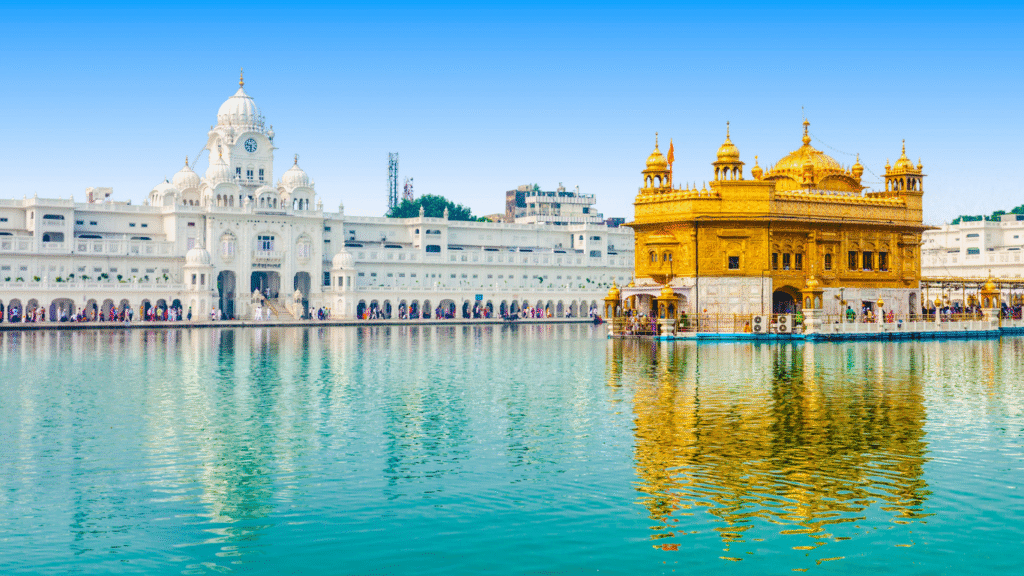
The Golden Temple
History of the Golden Temple
The Golden Temple was founded in 1581 by Guru Arjan Dev, the fifth Guru of Sikhism. The construction of the temple began under the guidance of Guru Arjan and was completed in 1604. The structure was designed with a blend of Mughal and Sikh architectural styles, reflecting the cultural harmony of the time. The temple is situated on a serene lake, known as Amrit Sarovar, which adds to its tranquil beauty.
The temple’s name, Harmandir Sahib, translates to “the Temple of God,” and it houses the Guru Granth Sahib, the holy scripture of Sikhism. The golden dome of the temple is made of pure gold, which gives it a majestic and breathtaking appearance.
In spite of these variations, most people credit Guru Arjan Dev for the construction of Harmandir Sahib. Interestingly, the foundation was laid in the hands of a Sufi saint- Mian Mir from Lahore. Harmandir Sahib assumed the name Golden Temple in 1830 when Raja Ranjit Singh overlaid the sanctum in gold leaf.
Significance of the Golden Temple in Amritsar
There are seven Gurudwaras that every Sikh wants to visit at least once in their lives. Five of them are called ‘Panj Takht‘ or five thrones of spiritual authority. The most important of these thrones is the Akal Takht at Golden Temple in Amritsar. The others are: Gurudwara Damdama Sahib in Bathinda, Gurudwara Sri Keshgarh Sahib in Anandpur Sahib, Gurudwara Patna Sahib in Patna and Gurudwara Hazur Sahib in Nanded.
Apart from the Panj Takht, Guru Nanak’s (first Guru) birthplace- Nankana Sahib near Lahore and Kartar Sahib in Kartarpur, where Nanak ji breathed his last, also hold a special place in the hearts of Sikhs. Both these places are in Pakistan now.
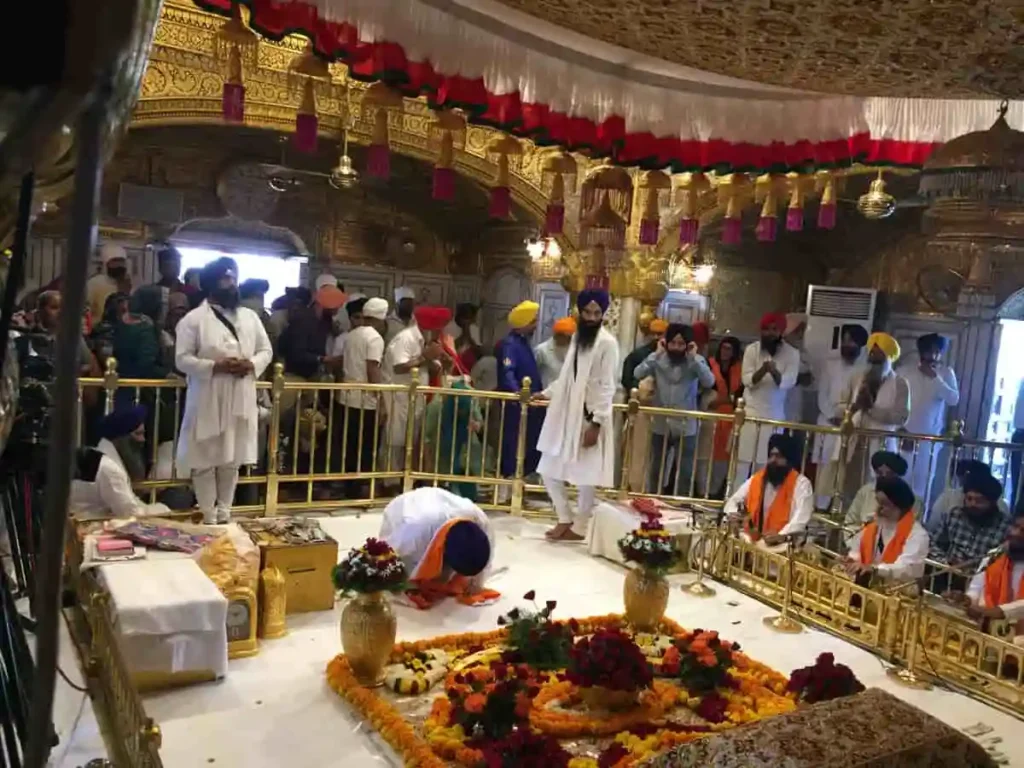
Inside the sanctum, Golden Temple
The Golden Temple Campus
The Golden Temple in Amritsar is a sight to behold, especially at night. At the center of the Amrit Sarovar is the central sanctum where sits the Guru Grant Sahib. Isn’t it unique that unlike other religions, the holy scripture is at the center of worshipping at Golden Temple? The central sanctum rising out of the water, covered in gold leaf looks stunning from a distance.
Surrounding the pool are several important buildings, the Akal Takht being the most prominent. Akal Takht is the chief authority of the Sikhs. It is just opposite the path leading to the central sanctum. The other buildings comprise several guesthouses for the devotees, an Assembly Hall, a Sikh museum, and the Community Kitchen-cum-Dining Hall.
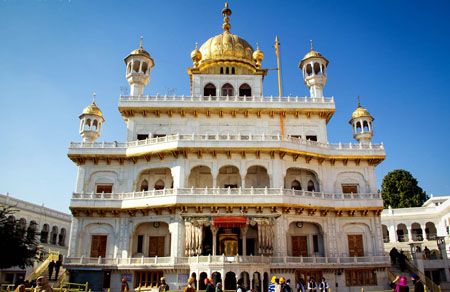
Akal Takht, Golden Temple Campus
Langar Hall at Golden Temple
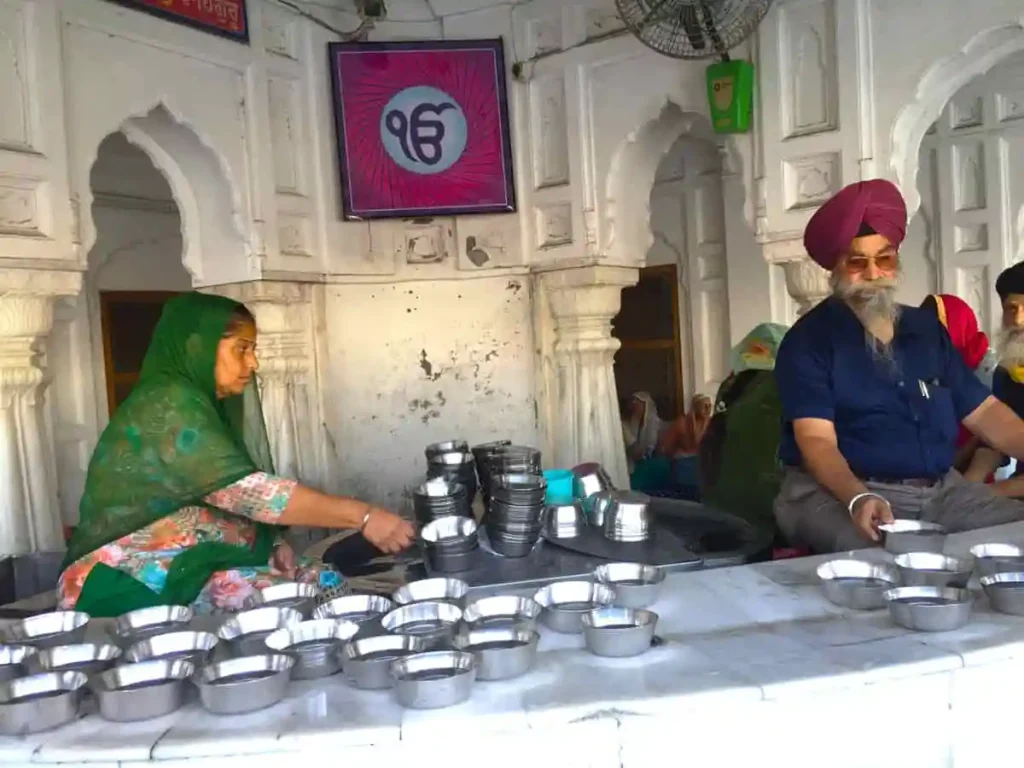
Golden Temple has 2 community halls where everyone is supposed to sit on the floor and eat the langar. While the dal (lentils) is served in the plate, one has to raise their hands to take the roti (bread) with religiosity and gratitude. Once the volunteers serve the food to everyone present in the hall, one of the volunteers makes a clarion call, “Jo Bole So Nihal”, meaning, Whoever Utters Shall be Happy, to which the crowd responds with, “Sat Sri Akal”, meaning True is the Name of God, and then the crowd commences eating the meal.
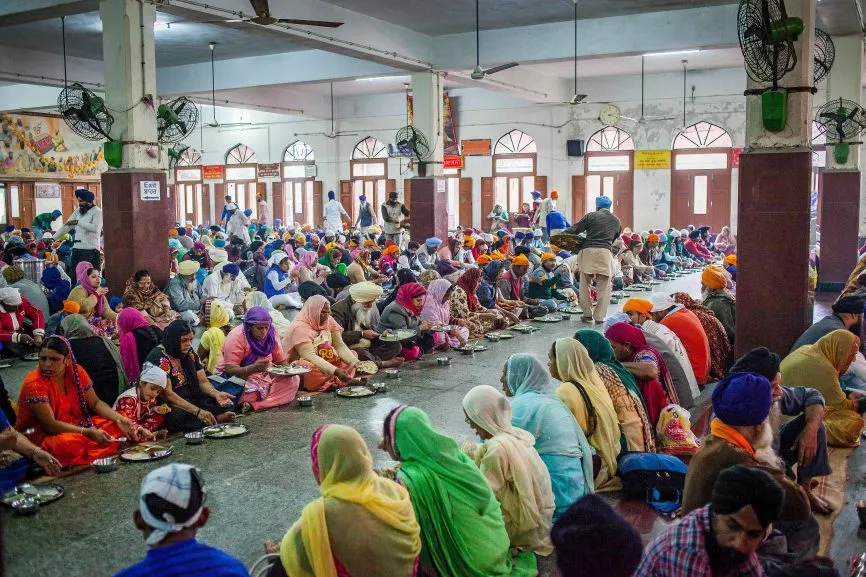
It runs 24 hours a day, everyday of the year. It cooks about 200,000 rotis and 1.5 tons of daal (lentils) everyday. The two dining halls at the langar can serve 5000 people at once! Interestingly, this gigantic task is carried out all by volunteers!
The langar not only embraces people from all faiths to have a meal together, it also encourages them to serve. It’s completely managed by the devotees- from preparing food, to washing the utensils to serving the devotees. Participating in a langar is such a wonderful experience!
Dukh Bhanjani Ber Tree
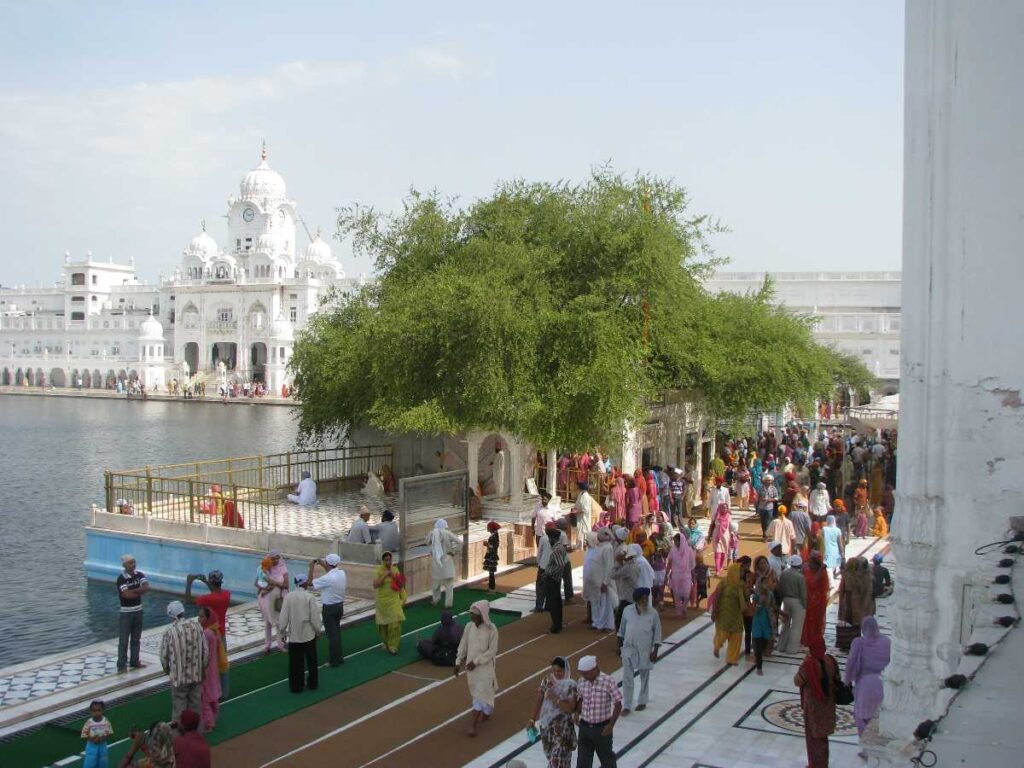
Dukh Bhanjani Ber Tree
Spirit of service:
The culture of ‘service to humanity’ manifests itself in terms of ‘volunteering’ at the Golden Temple in Amritsar. It’s so heartening to see how the volunteers happily and tirelessly working towards keeping everything in order.
Before you enter the Golden Temple in Amritsar, you have to take off your shoes at the main entrance. At the shoe-house, you find these well dressed, well mannered people helping you out in keeping your shoes safe. They are volunteers. After entering the premises, you take a walk around the lake; most probably you will come across people sweeping the courtyards clean. They are volunteers. A little ahead, you will find people offer you drinking water and kada prasad. They are volunteers. And then you will proceed to have langar. All of them preparing the food and serving it, are volunteers.